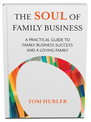

Welcome to 2020! To celebrate the new decade, we’re pulling a meaty tidbit straight out of the heart of The Soul of the Family Business by Tom Hubler and learning Hubler’s five secrets of highly successful family-owned businesses. While obviously these are not the be-all-end-all of success (these tips occupy merely a few pages of a lengthy and insightful book), they are fundamental lessons that can be taken alongside more detailed explanations and strategies found within the rest of the book and this website. For more information, consider picking up The Soul of the Family Business, but without further adieu, here are five secrets of highly successful family-owned businesses:
- They minimize potential conflict with a board of directors. One of the hardest stages of a growing business is when the founder/visionary/head of the family reaches retirement, leaving the business to set out on its own path towards success without them. This can lead to all sorts of conflict and discomfort, especially if children of the founder are working with the company. Setting up a board of directors creates a neutral, outside source of expertise that can help make objective decisions and reduce conflict between the outgoing generation and the incoming generation of leaders.
- They embrace structure with regular family meetings. One of the greatest strengths of a family business is the intuition, closeness, and deep-seeded bonds that exist between family members. However, this same emotional closeness can be a source of stress, tension, and conflict unique to family businesses as well. Successful business families know that they need to actively and intentionally structure their lives in a way that ensures that the business and personal side of the family stay in a healthy balance, and regular family meetings (that include the whole family, even those outside the business) to discuss boundaries, limitations, and appropriate behavior are a time-tested way of achieving this balance.
- They create a family participation plan. In addition to family meetings, a Family Participation Plan™ is also vital to maintaining appropriate structure in the family business. This plan lays out the ground rules for becoming involved in the family business and can encompass any number of criteria, ranging from whether or not a family member needs outside work experience first, how they should expect to be treated fairly when it comes to performance issues, what succession expectations look like, etc. This means that any family members entering the business knows exactly where they stand and can point to a structure in place rather than having to learn to navigate a unique situation in the moment.
- They work on their communication and conflict management skills. While this advice can certainly be appreciated by anybody, those in business families in particular know the struggles of having to simultaneously handle interpersonal and professional conflict, often uncomfortably mixed together. For this reason and others, Hubler highly recommends those in business families take a course to develop personal communication skills (suggested: Sherrod Miller’s Collaborative Team Skills program).
- They create--and adapt--their family vision. All business families can benefit greatly from having an earnest and honest discussion of their ideals, values, and shared beliefs, and turning these into a Common Family Vision™ that guides each member individually as well as guides the family business. A Common Family Vision™ can be the foundation for a Family Participation Plan™, which combined will ensure that the business is being run in-line with the values of the family behind it.
The Best Offense is a Good Defense
It may be a cliche, but this common coach’s saying bears the truth. To quote Hubler, “It’s always easier to prevent a problem than to try to fix one,” and the common component of all of these secrets is that they are proactive, not merely reactive. Successful family businesses attain success not by constantly quashing problems, but by taking intentional steps to minimize potential conflicts before they even arise. Through personal anecdotes, real-world case studies, useful tools and frameworks, and more, Hubler offers an in-depth look at how the most successful business families create structures to prevent conflict and turn the potential pitfalls of working with loved ones into exceptional, unique strengths. For all of this, pick up The Soul of the Family Business, available in hardcover form on Amazon.com, directly through Itasca Books, or at a bookstore near you. And of course, if you’re ready to take the next steps, you can always contact Hubler for Business Families today to set up a free orientation meeting with Thomas Hubler, the expert on family business planning.
 RSS Feed